
Tax Appeal Appraisals Reduce Property Tax Burden Wisely
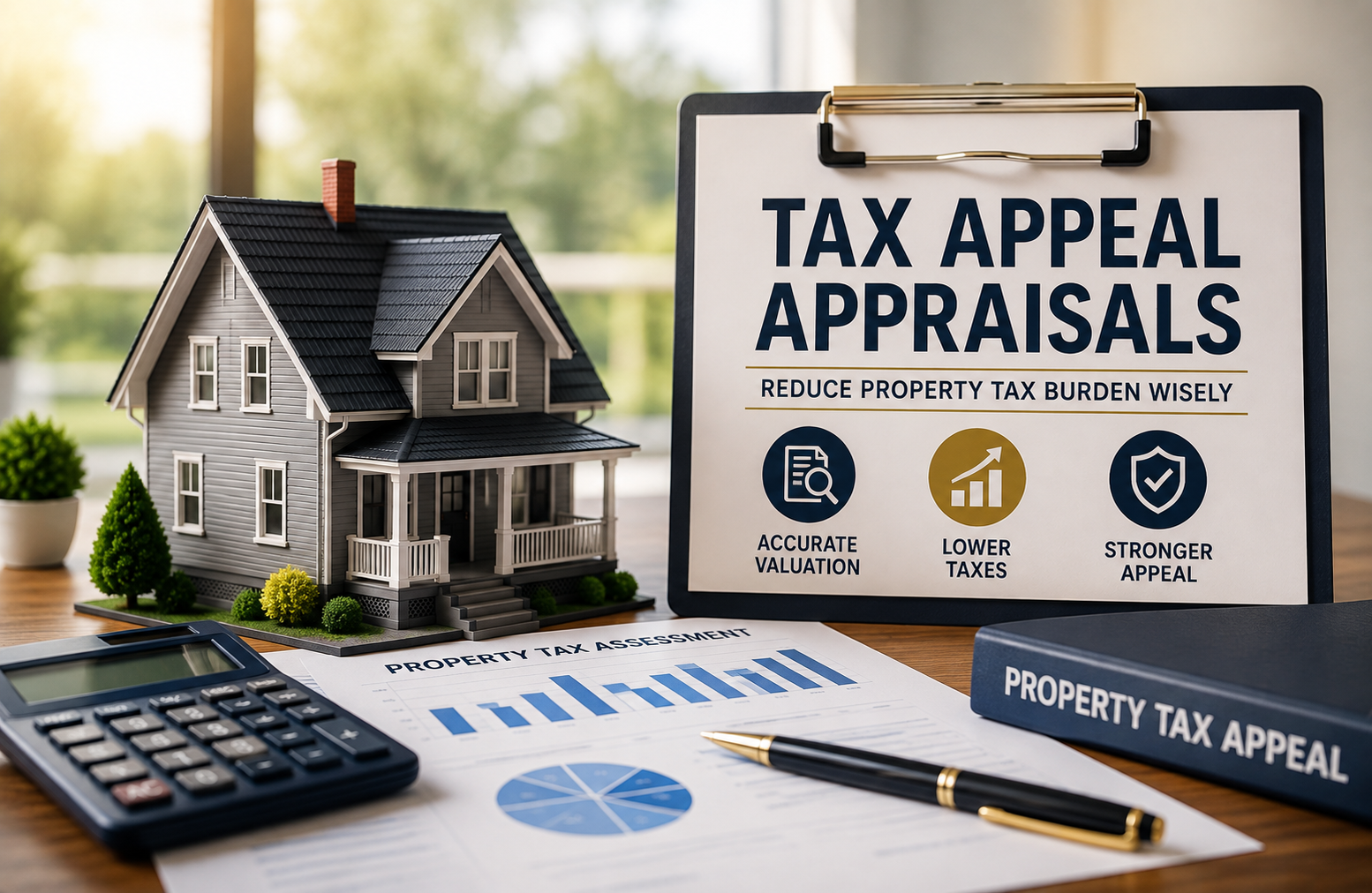
Owning a home comes with many financial responsibilities, and property taxes are one of the biggest ongoing expenses. While tax assessments are intended to reflect the fair market value of your property, they are not always accurate. An outdated valuation, incorrect property details, or changing market conditions can lead to higher tax bills than necessary.
This is where Tax Appeal Appraisals become valuable. A professional appraisal provides an independent opinion of your home's market value, giving property owners credible evidence when appealing an inaccurate assessment. Instead of paying more than you should, an accurate valuation can help support a fair review of your property's taxable value.
If you believe your property taxes are higher than they should be, understanding the appeal process is the first step toward protecting your finances.
Why Property Tax Assessments Can Be Incorrect
Property tax assessments are often completed using mass appraisal methods rather than detailed inspections of every individual home. While this approach works for large numbers of properties, it can also create valuation errors.
Some common reasons include:
- Outdated market information
- Incorrect square footage or property records
- Improvements that are no longer present
- Failure to consider property condition
- Neighborhood market changes
- Comparing your home with dissimilar properties
Even small inaccuracies may significantly increase your annual property tax bill.
What Is a Tax Appeal Appraisal?
A tax appeal appraisal is a detailed valuation prepared by a licensed real estate appraiser specifically to support a property tax appeal. The appraisal determines your home's current fair market value based on accepted appraisal standards, recent comparable sales, local market trends, and property characteristics.
Unlike automated assessment systems, a professional appraisal considers the unique features of your property, resulting in a more accurate and reliable valuation.
This report may become important evidence when presenting your appeal before the local assessment review board.
Signs You Should Consider an Appeal
Not every assessment is incorrect, but several warning signs suggest it may be worth requesting an independent valuation.
You may benefit from an appeal if:
- Your tax bill increased significantly without major improvements.
- Nearby similar homes have lower assessed values.
- Your home's assessed value exceeds its market value.
- Property records contain factual errors.
- Market prices have declined since the assessment.
- Comparable homes recently sold for much less.
Reviewing your assessment carefully can help identify these issues before filing an appeal.
How the Appraisal Process Works
A professional appraisal follows a structured process designed to produce an unbiased market value.
Property Inspection
The appraiser inspects both the interior and exterior of the property. Factors such as layout, condition, upgrades, lot size, and overall quality are documented.
Market Research
Recent comparable home sales are analyzed. Adjustments are made for differences in size, location, age, condition, and amenities.
Data Analysis
Current housing market trends, neighborhood demand, and local pricing patterns are evaluated to determine realistic market value.
Appraisal Report
The final report explains the valuation methodology, supporting evidence, comparable sales, photographs, and conclusions that may strengthen your tax appeal.
Benefits of an Independent Appraisal
Many homeowners assume appealing property taxes is difficult. However, having professional documentation often improves confidence throughout the process.
Advantages include:
- Objective market valuation
- Strong supporting documentation
- Greater credibility during hearings
- Better understanding of local property values
- Potential long-term tax savings
- Evidence based on professional appraisal standards
An independent appraisal removes much of the guesswork from the appeal process.
Common Mistakes That Can Hurt Your Appeal
Many property owners submit appeals without sufficient evidence. Avoiding these common mistakes can improve your chances of success.
Relying Only on Online Estimates
Automated valuation tools may provide rough estimates but rarely meet the documentation standards required during tax appeals.
Missing Appeal Deadlines
Every county follows specific filing deadlines. Missing them could delay your opportunity to challenge the assessment.
Using Poor Comparable Sales
Properties selected for comparison should closely match your home's location, size, age, and features.
Ignoring Property Record Errors
Incorrect public records can significantly influence assessed values. Always verify the information before filing.
Assuming Every Increase Is Incorrect
Market appreciation naturally increases property values. An appeal should focus on inaccurate assessments rather than normal market growth.
How a Certified Residential Appraiser Can Help
An experienced Certified Residential Appraiser Chicago homeowners rely on understands local housing markets, appraisal regulations, and accepted valuation methods.
Professional appraisers evaluate factors that automated systems often overlook, including property condition, neighborhood influences, renovations, functional layout, and recent comparable sales.
Their independent analysis provides objective documentation that may strengthen your appeal while giving you a clearer understanding of your property's true market value.
Preparing Before Filing an Appeal
Proper preparation can make the process smoother and more effective.
Helpful steps include:
- Review your assessment notice carefully.
- Verify public property records.
- Gather recent comparable home sales.
- Collect documentation of property defects if applicable.
- Keep records of recent improvements.
- Obtain an independent appraisal report.
- Organize supporting documents before your hearing.
Being well prepared allows you to present a stronger, evidence-based appeal.
Final Thoughts
Property tax assessments are not always perfect, and even minor valuation errors can increase your annual expenses for years. Reviewing your assessment, verifying property records, and obtaining professional valuation evidence can help ensure your taxes are based on a fair market value rather than inaccurate estimates.
A well-prepared appeal supported by credible appraisal documentation gives homeowners a stronger opportunity to challenge excessive assessments while making informed financial decisions for the future.


 English
 Arabic
 French
 Spanish
 Portuguese
 Deutsch
 Turkish
 Dutch
Dutch
 Italiano
 Romaian
 Portuguese (Brazil)
 Greek
Greek