
Junk in the Trunk: Turner's Auto Wrecking Is America's Most Beautiful Graveyard
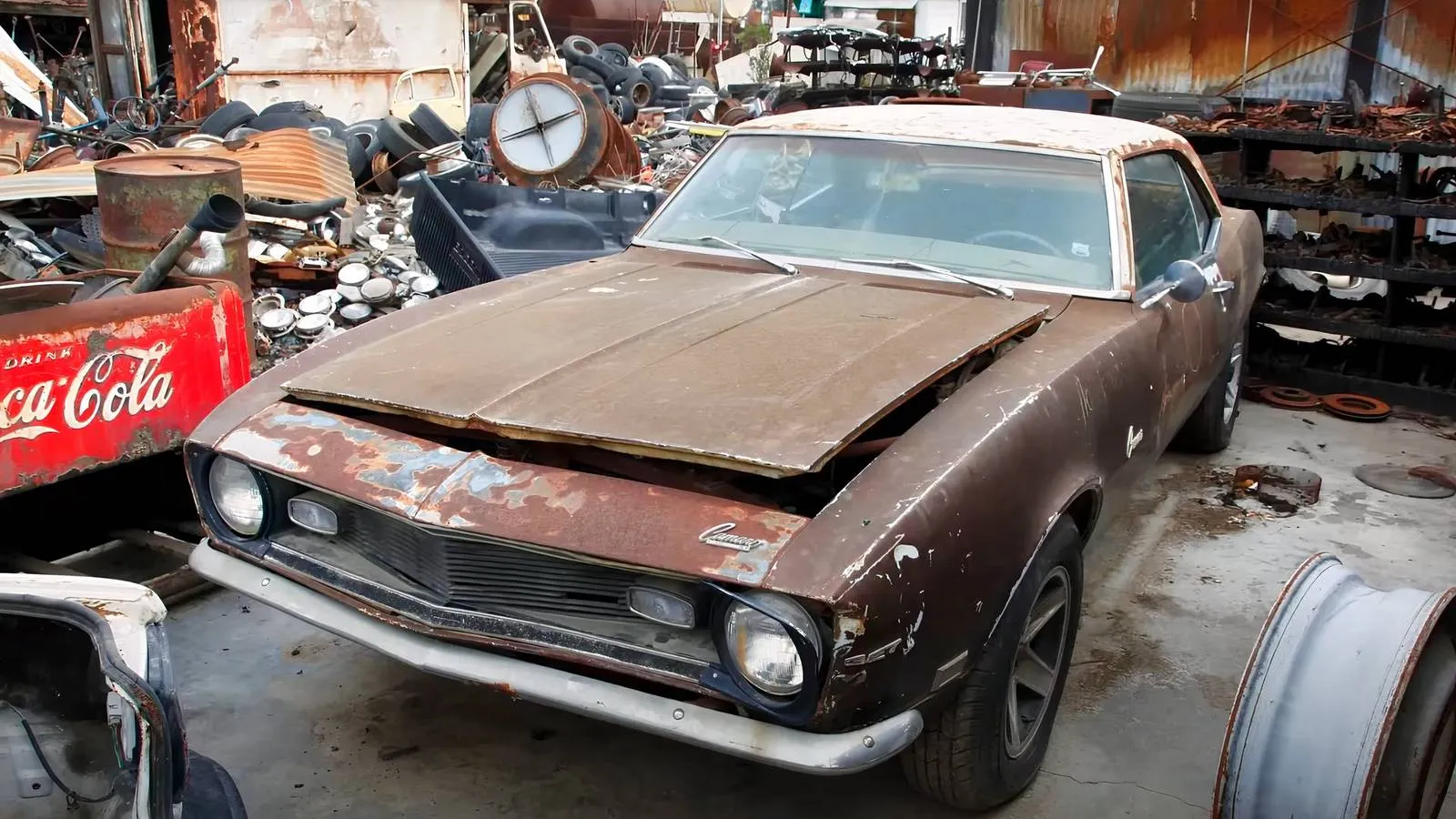
Time has a funny way of treating things in Fresno, California. While most of the world races toward synthetic engine sounds and autonomous pods, a dusty corner of the Central Valley just keeps humming to the tune of rusted V8s. Turner's Auto Wrecking is not a salvage yard – it's a 60-year-old open-air museum curated by sunlight, neglect, and a family that never believed in the crusher as anything more than a piece of yard art. Run since 1960 by Jerry Turner, now in his eighties, the place has morphed into a pilgrimage site where faded glory sits bumper to bumper with rare engineering oddities. California's dry climate plays the role of a preservation wizard, keeping generations of steel from dissolving into orange dust, so every fender, hubcap, and cracked dashboard still whispers stories from Eisenhower-era highways to disco-era streets.
Walking through Turner's is less like shopping and more like an archaeological dig through Americana. There is no algorithm recommending what to see next; just a dirt path and the occasional glint of chrome beneath a collapsed hood. One visitor might stumble across a 1950s Kaiser Manhattan, a machine so obscure it makes a hipster's fixed-gear bicycle seem mass-produced. This particular Kaiser comes with a supercharged secret – an ultra-rare factory blower that, back in the day, wanted so badly to be in a muscle car two decades too early. Not far from it, a 1970s Chevrolet Cosworth Vega sits in peaceful retirement. The little sporty compact was essentially a collaboration between Chevy and the British engineering firm Cosworth, placing a twin-cam jewel into an unsuspecting economy body. Today, the Vega's absence from mainstream memory feels like a cosmic joke, but at Turner's it still gets to dress up in history.
The yard's muscle car row reads like a fantasy garage sale from a gearhead's dream. Chevelles, Impalas, Novas, and Mustangs squat side by side, their glassy eyes fixed on a finish line that will never come. A 1968 Chevelle – complete with scars that reveal decades of repair history – perches like a retired prizefighter. Its flaking paint is not a flaw but a badge of honor, proof that someone once cared enough to keep it alive through hard launches and harder landings. And then there is the '59 Cadillac, an aircraft carrier of a car with tailfins so iconic they could double as weather vanes. At Turner's, these fins are not restored to concours shine; they are allowed to age like a good whiskey, turning deeper shades of narrative with every passing season.
Rarest of all, perhaps, is the hand-painted 1930s Ford, a former dirt-track warrior that looks like it drove straight out of a black-and-white photograph and decided to never wash off the mud. Its flanks are covered in lettering applied by a brush rather than a vinyl cutter – a touch so authentic that modern customizers would pay a fortune to replicate it badly. Wedged nearby are a 1962 Valiant with its oddly angled insistence on being noticed, a 1969 Cougar that seems to wear its repair patches like medals, and a 1954 Willys Jeepster, a vehicle that only a handful of people bought new and even fewer can identify today. Being forgotten, however, is a superpower in this museum of misfit toys.
And yet, the most ironic resident of Turner's Auto Wrecking is the one machine actually designed to destroy everything around it. Meet \u201cThe Masher,\u201d a 1974 car crusher that refuses to crush anything. Powered by a thunderous 440 Mopar V8 – the same powerplant found in Chargers and Road Runners – this beast was built to flatten automobiles into pancakes. Instead, it sits as the yard's mascot, a monument to mechanical ingenuity that now spends its days just looking intimidating. The Masher embodies the philosophy of Turner's: nothing truly dies here, it simply changes job descriptions. Jerry Turner himself once dreamed of building a racetrack through the wrecks, but settled for an airstrip instead. That kind of visionary chaos seeps into the soil and makes this place feel less like a business and more like an outsider art installation.
For the modern pilgrim, Turner's is a choose-your-own-adventure. Photographers and filmmakers flock to it because the backdrops pulse with texture no CGI can fake. Restoration junkies come hunting for that one impossible-to-find bracket that has not been manufactured since Nixon was in office. Casual visitors simply wander among the rolling biographies of American car culture, possibly spotting a 1968 Plymouth Barracuda that still looks fast even while rooted to the earth. The key, as any Turner veteran will admit, is to manage expectations. This is not a parts store with a searchable inventory and bar-coded shelves. It is a junkyard with a historic heart, which means the '69 Mustang you saw in a YouTube video last year might have finally found a new owner – or finally become one with the dirt. Calling ahead is less a suggestion and more a survival tactic.
In 2026, as the automotive world buzzes about solid-state batteries and over-the-air updates, Turner's Auto Wrecking remains gloriously unplugged. It stands as proof that the most compelling stories are not written in polish and perfection, but etched in metal that has survived the elements through sheer stubbornness. Every crushed velvet interior turned to rodent condominium, every seized engine that will never again taste gasoline, and every cracked windshield reflects a culture that once measured freedom in cubic inches. Turner\u2019s is not a place where cars come to die; it\u2019s a place where they come to be remembered. And if a certain 440-powered crusher ever decides to wake up and do its job, one suspects Jerry Turner will just find something else to weld a story onto. The yard\u2019s greatness, after all, was never about the shiny chrome \u2013 it was about the passion that refused to fade, one rusty hulk at a time.
As the automotive landscape continues to evolve, the stories captured at Turner's Auto Wrecking remind us of the enduring allure of classic vehicles and the narratives they carry. While enthusiasts explore the yard for relics of the past, the modern driver often seeks ways to navigate the ever-changing market of new and used vehicles. For those who prefer the digital realm over the tactile experience of a junkyard, keeping track of fluctuating prices and deals can be a daunting task.
Fortunately, with tools designed to simplify this process, such as this price tracking tool, car buyers and collectors can stay informed about market trends and price drops. Whether you're in search of a vintage find or just keeping an eye on your next daily driver, such resources ensure you never miss an opportunity to add a new chapter to your own automotive story.

 English
 Arabic
 French
 Spanish
 Portuguese
 Deutsch
 Turkish
 Dutch
Dutch
 Italiano
 Russian
 Romaian
 Portuguese (Brazil)