
European Sports Cars of the '70s That Left the Chevelle SS 454 in the Dust
Everyone knows the story: the early 1970s were the twilight of the original American muscle car party. Before fuel crises and emissions rules pulled the plug, Detroit was still throwing around cubic inches and horsepower like confetti. The undisputed king of the dragstrip back then was the 454 LS6–powered Chevy Chevelle SS. Car & Driver famously wrung a 5.4-second 0–60 mph out of it and a top speed of about 140 mph. For its time, that was fast—enough to humble plenty of European sports cars at the stoplight.
But here’s the thing. The ’70s also gave birth to a new breed of European performance machine, cars that weren’t just about going quickly from zero to sixty. They were designed to keep pulling, and pulling, and pulling. Their top speeds crept closer to the 200-mph mark, a territory where the mighty Chevelle simply ran out of breath. So while the Chevelle SS 454 might huff and puff to 140 mph red-faced and screaming, the seven machines below would breeze past that number with a gear to spare and a shrug.
Buckle up. Let’s take a tour of the 1970s European exotics that didn’t just match the Chevelle’s launch—they disappeared over the horizon.
🇮🇹 Lamborghini Countach LP400S – The Wedge That Rewrote the Rulebook
You could spot that silhouette from a mile away. The Countach defined what a supercar should look like for an entire generation. The LP400S arrived in 1978 and, believe it or not, it was actually a touch slower to 60 mph than the earlier LP400. Still, 5.9 seconds was respectable, and its top speed of at least 158 mph meant it would leave the Chevelle in its flared-arch wake on any long enough straight.
But raw numbers don’t tell the whole story. The Countach made you feel fast even standing still. Its scissor doors, the low-slung cockpit, that howling V12—it was a four-wheeled dream. The Chevelle might win a streetlight skirmish, but nobody would call it a cooler way to arrive. The Countach soldiered on until 1990, proving that true icons age like fine wine.
🇮🇹🇺🇸 De Tomaso Pantera – An Italian-American Hot-rod
Now here’s a car that doesn’t get nearly enough love. The Pantera was a delightful mongrel: svelte Italian bodywork draped over a thumping 5.8-liter Ford Cleveland V8. Output was 325 hp and 344 lb-ft of torque, launching it to 60 mph in 5.5 seconds—just a tenth behind the Chevelle, if you’re counting. Top speed? A breezy 159 mph.
The Pantera drove like a muscle car with an Italian accent. It was raw, loud, and occasionally temperamental, but it had a character all its own. While the Chevelle was about straight-line brute force, the Pantera added a dash of continental flair. It lasted all the way to 1990, yet somehow never got the same poster-on-the-wall status as some of its rivals. Maybe that’s starting to change, one day.
🇩🇪 Porsche 911 Turbo (930) – The Acceleration King
If you’re hunting for the quickest car on this list—and the one that utterly schools the Chevelle SS 454 off the line—look no further. The 911 Turbo, known as the 930 in America, was an absolute sledgehammer. Early cars had a 3.0-liter turbo flat‑6 with 256 hp, but the 1978 bump to 3.3 liters brought 296 hp and 304 lb-ft. Car & Driver clocked both versions at 4.9 seconds to 60 mph.
The Porsche didn’t just beat the Chevelle; it made that 5.4-second time feel pedestrian. Top speed for the 3.3-liter was tested at 162 mph by Auto Motor und Sport, so it also had the upper hand when corners turned into straights. No thundering V8 soundtrack, sure, but the wail of that air-cooled turbo more than made up for it. These early 911 Turbos are now some of the most coveted sports cars in the world—raw, uncompromising, and still capable of embarrassing modern traffic. Plus, with restomods from companies like Singer, their legend only grows.
🇮🇹 Ferrari 512 BB – The Flat-12 Symphony
A lot of folks overlook the 512 BB, and that’s a crying shame. Launched in 1976, it packed a 4.9-liter flat-12 that pumped out 335 hp and 333 lb-ft. Autocar’s independent test gave it a 0–60 mph time of 5.4 seconds—dead even with the Chevelle—and a top speed of 169 mph. So while the muscle car tapped out at 140, the Ferrari was still pulling like a freight train with a spine-tingling flat-12 howl filling the cabin.
The 512 BB didn’t rely on a badge alone; it delivered a driving experience that blended grand-touring comfort with electrifying performance. It’s one of those cars that makes you wonder why it doesn’t get mentioned in the same breath as a Daytona or a Dino more often. But for those in the know, it remains a deeply satisfying classic that can still hang with the best.
🇬🇧 Aston Martin V8 Vantage – Britain’s First Supercar
If the Chevelle SS 454 is the brash American in a leather jacket, the Aston Martin V8 Vantage is the debonair gentleman in a tailored suit—hiding a similarly ferocious punch. The early Vantage wasn’t always the most reliable or beloved, but underrate it at your own peril. By 1977, its 5.3-liter V8 was churning out 380 bhp, rising to 390 bhp in the 1978 “Oscar India” models. That translated to a top speed of 170 mph, earning it the unofficial title of “Britain’s first supercar.”
You know what? This car feels like a British cousin to the Chevelle. Both rely on a snarling, big-cube V8; both prefer the point-and-squirt approach to corners; both were among the fastest of their era. Yet the Aston adds a layer of leather-lined refinement and aristocratic cool that the bowtie bruiser just can’t match. It’s a grand tourer that can cruise all day and tear your face off when provoked—and look a million pounds doing it.
🇮🇹 Lamborghini Miura SV – The Original Supercar
Some cars don’t just bend the rules—they rewrite them completely. The Miura is widely considered the world’s first supercar, and the SV variant was its ultimate production evolution. Arriving in 1971, it carried a 4.0-liter V12 massaged to 380 hp and 295 lb-ft of torque. Thanks to a featherweight body of just 2,862 lb, Lamborghini claimed a top speed of 186 mph.
Let that sink in. The Chevelle SS 454, for all its muscle, would be a speck in the Miura’s rear-view mirror before the Italian had even stretched its legs. The SV didn’t just beat the Chevy; it redefined the upper limits of what road cars were capable of. Even today, the mere sight of a Miura makes grown enthusiasts weak at the knees.
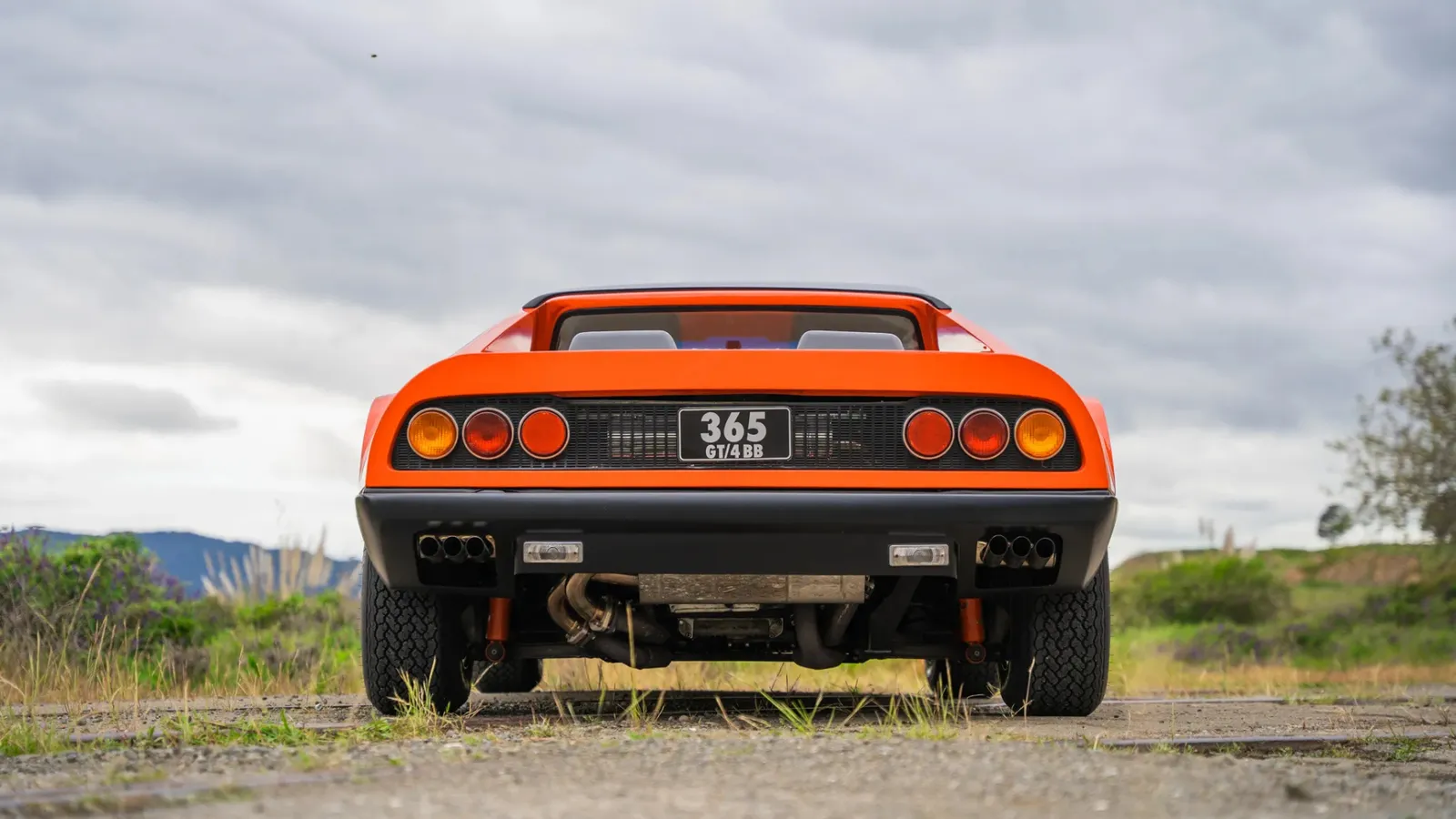
🇮🇹 Ferrari 365 GT4 BB – Possibly the Fastest Car of the ’70s
If you thought the 512 BB was underappreciated, its older brother is practically invisible. The 365 GT4 BB arrived earlier in the ’70s with a smaller 4.4-liter version of the flat-12, but don’t let the size fool you—it made 339 hp and 302 lb-ft, actually out-punching the later 4.9-liter. Acceleration matched the Chevelle’s at 5.4 seconds to 60 mph, but the top speed climbed to a staggering 188 mph.
That number doesn’t just beat the Chevelle; it humiliates it. The 365 GT4 BB was arguably the fastest production car on the planet for a time, yet it rarely gets the spotlight it deserves. While the Chevelle was busy dominating American boulevards, Ferrari’s flying wedge was silently laying claim to open-road supremacy. Sometimes the quietest legends speak the loudest at full throttle.
What’s fascinating isn’t just that these seven European exotics outpaced the legendary Chevelle SS 454—it’s how they did it. The muscle car formula was all about brute torque and stoplight heroics, a short sharp burst of violence. These cars, on the other hand, were long-distance runners. They were designed to keep accelerating into a realm the Chevelle simply couldn’t touch, blending exotic engineering, wind-cheating shapes, and sometimes an entirely different musical soundtrack.
So next time you hear someone wax nostalgic about the golden age of American muscle, give a nod to the 454 Chevelle. It truly was the king of its hill. Then point toward the horizon and whisper the names of the eighties-forebears that were already leaving that hill behind. In the end, every hero needs a faster rival to chase—and in the 1970s, the chase was already on.
As the legacy of these classic supercars continues to captivate enthusiasts, it’s a reminder of how passion for performance often intersects with the pursuit of the rare and collectible. In today's world, the thrill of the hunt extends beyond the realm of cars, touching various interests and hobbies. For those who delight in the chase of acquiring the latest video games or rare collectibles, staying informed on pricing trends is key.
Just as car collectors seek out the best deals on their dream machines, gamers can benefit from a reliable resource to track the best prices on their favorite titles. That's where a game price tracker like DealNest comes into play. It offers tools to help navigate the ever-changing landscape of game pricing, ensuring that you’re always in the driver's seat when it comes to scoring the best deals, much like the collectors of classic Italian supercars.

 Arabic
 French
 Spanish
 Portuguese
 Deutsch
 Turkish
 Dutch
Dutch
 Italiano
 Russian
 Romaian
 Portuguese (Brazil)
 Greek
Greek