
Unearthing Overlooked Muscle: My Hunt for the Era's Rarest Beasts
There’s nothing quite like the feeling of stumbling upon a car that makes you stop mid-scroll and say, “Wait, what in the world is that?” That’s exactly what happened to me back in 2026, during one of my late-night rabbit-hole dives through auction archives. The muscle car era of the ‘60s and early ‘70s was an absolute barnburner—a time when massive displacement, snarling exhausts, and quarter-mile bragging rights meant everything. But for every legendary Hemi ‘Cuda convertible now fetching seven figures, there are a dozen insane machines that slid under the radar. These are the underdogs, the homologation specials, the brand-offs that time nearly forgot. And believe me, as a regular Joe who bleeds gasoline and torque, finding them feels like uncovering buried treasure.
Let me take you on a little cruise through the dusty backroads of muscle car history. I’ve had the privilege (read: obsession) of tracking down some of the most overlooked bruisers of the golden age. Each one has a story that deserves way more street cred than it ever got.
The Eliminator That Played Second Fiddle to a Pony
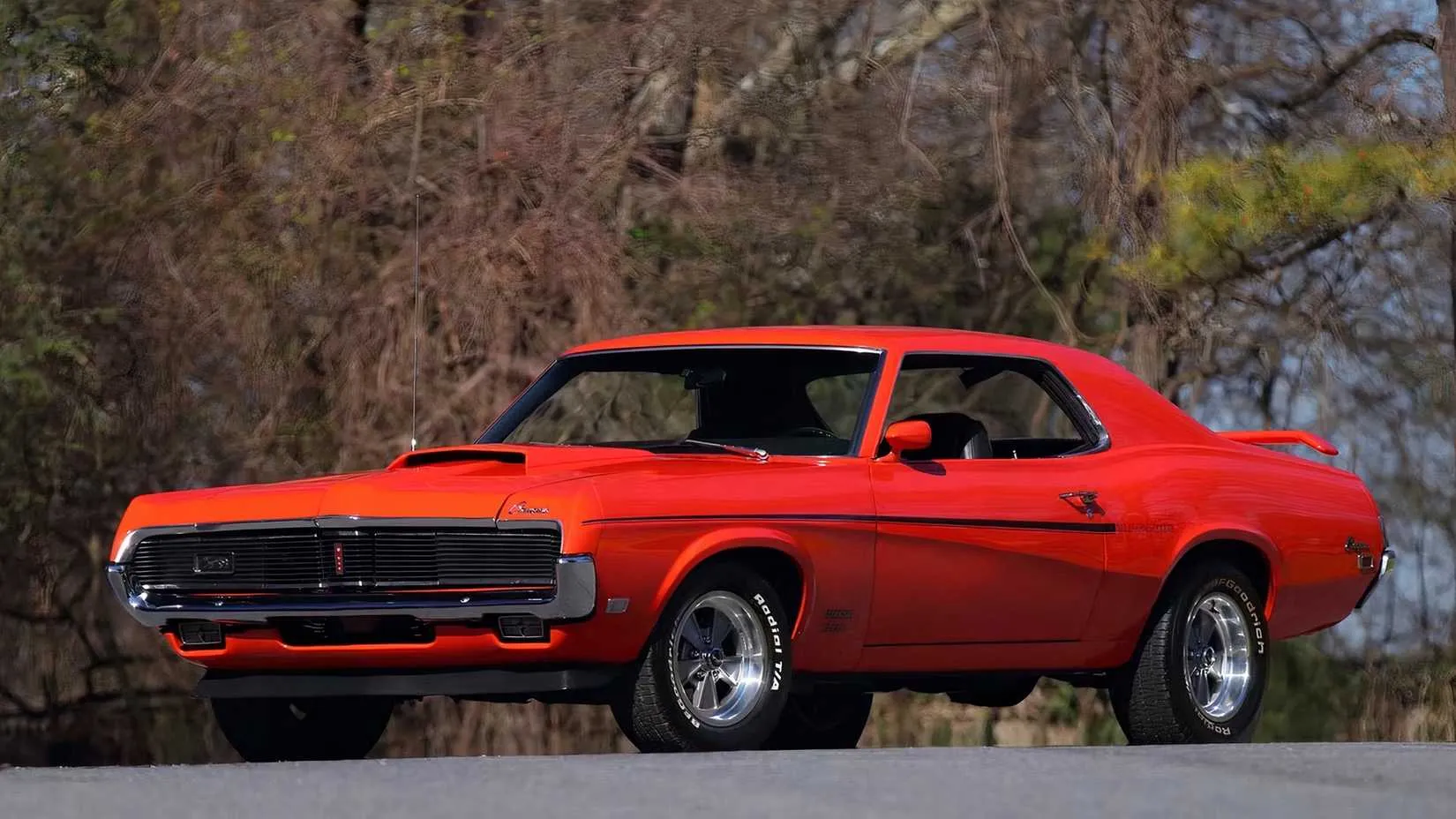
I remember the day I first laid eyes on a 1969 Mercury Cougar Eliminator. It was at a local Mecum preview, and I damn near broke my neck doing a double-take. Here was a car that was supposed to be a step above a Mustang, yet it spent its life being the Jan Brady of the Ford family. Mercury wanted the Cougar to be the sweet spot between everyday Ford swagger and entry-level Lincoln luxury, but that placed it in a dogfight with the Mustang—and even with the legendary Boss 302 V8 as an option, most folks just went for the pony.
Most Eliminators rolled out with the 428-cu-in Cobra Jet V8, officially rated at 335 horsepower and 440 lb-ft of torque. That’s enough grunt to hustle the big cat through the quarter mile in the mid-14-second range, which ain’t shabby at all. Only about 169 left the factory with the high-revving Boss 302, making them rarer than hen’s teeth. Tack on tightening emissions regs, insurance premiums going through the roof, and Mercury’s pivot toward cushy luxury, and the Eliminator was dead after 1970. It’s the kind of ride that makes you want to give history a swift kick and say, “You blew it.”
The Scrambler with a Patriotic Paint Job
Next on my under-the-radar hit list is the 1969 AMC Hurst SC/Rambler. Honestly, the first time I saw one, I thought someone had gone rogue with a paint gun—the semi-patriotic livery is unapologetically in-your-face. It’s the automotive equivalent of a bald eagle screaming “freedom” while burning rubber. This little monster was AMC’s homologation special for NHRA F/Stock racing, packing a 390 cu-in V8 that spat out 315 horsepower and a boatload of 420 lb-ft of torque. All that through a four-speed manual, no less.
It could rip a quarter-mile in 14.3 seconds, which in 1969 meant you could humble plenty of big-block heavyweights from the Detroit Big Three. And yet, most collectors today still scratch their heads when they see one. AMC might have been the scrappy underdog, but the SC/Rambler proves they came to play hardball. Spotting one of these in the wild feels like finding a unicorn in a pony field.
The NASCAR-Bred Mystery Machine
Now, let’s talk about a car that’s got a bit of a numbers riddle attached to it. The 1969 Ford Torino Talladega. Official registries say 750 were built, but some sharp-eyed researchers swear there were 754 examples. Either way, that’s a drop in the bucket. Ford cooked up this homologation special to grease the wheels for NASCAR dominance, bridging stock-car engineering with a street machine.
Under the hood sits the proper 428 Cobra Jet V8, rated 335 hp and 440 lb-ft, hooked to a three-speed automatic. Zero to hero in 14.7 seconds through the traps. The Talladega only came in three colors, and just 199 lucky souls ordered theirs in Presidential Blue. Finding one today is like spotting Bigfoot—except Bigfoot doesn’t come with a Windsor block and NASCAR heritage. I keep one on my lottery-win wish list, right next to a garage big enough to house it.
The Hurst/Olds That Outpunched Its Paperwork
When you think of dealer-special muscle, names like Yenko usually steal the spotlight. But let me tell you about the 1968 Oldsmobile Hurst/Olds—the one that, in my opinion, deserves a standing ovation every time its dual-gate shifter clicks into gear. George Hurst, the guy who later invented the Jaws of Life (talk about a legacy), put together a package that mixed factory punch with aftermarket shrewdness.
The big deal here was the 455 cu-in V8, officially stamped 390 horsepower and a mind-bending 500 lb-ft of torque. But here’s the kicker: period dyno tests and plenty of bench-racing chatter insisted these engines were making well over 400 hp straight from the factory. That’s enough twist to crack off a 13.9-second quarter mile, which in 1968 put you squarely in supercar-annihilator territory. Only 906 copies were built for 1969, making this big Olds one of those “if you know, you know” machines. I’d be lying if I said I haven’t spent way too many hours daydreaming about rowing through that Hurst shifter.
The Drag-Strip Monster Built for a Rulebook
If there’s one car that makes my drag-racing heart go pitter-patter, it’s the 1964 Ford Fairlane Thunderbolt. Unless you’re a hardcore quarter-mile junkie, you’ve probably never heard of it. Ford built just 100 of these fire-breathers: 49 with a four-speed stick and 51 with an automatic. They weren’t meant for the polite boulevard cruise; they were NHRA Super Stock homologation warriors.
The stats? A 425-cu-in V8 cranking out 425 horsepower and 480 lb-ft of torque. Full stop. That was enough to send the Thunderbolt through the traps in a hair over 13 seconds flat—back in ‘64! For context, that’s quicker than just about anything else you’d find with a license plate. As one of the very first factory drag specials, it’s a rare gem that’ll never be duplicated. I once saw one launch at a nostalgia drag meet, and I swear I felt the ground tremble. Pure American thunder.
The Rogue That Snuck a Big Block Into a Small Package
You might raise an eyebrow at a Rambler in a muscle car conversation, but hear me out. In 1967, AMC built the Rambler Rogue convertible, and only 58 of those lucky few ever got the optional 343 cu-in V8. That’s like stuffing a bear into a Mini Cooper. The car itself is small and comparatively light, which makes the 280 hp and 365 lb-ft of torque feel positively mischievous.
With a four-speed manual sending power to the rear, the Rogue could lay down a 14.7-second quarter mile, shocking many a big-block antagonist. I spotted one at a low-key auction last spring and could barely contain my excitement. The seller looked at me like I was nuts, until I pointed out only 55 Rambler 440 models also got that engine—making any AMC V8 drop-top about as common as a politician’s apology.
The Super Duty That Simply Walked Away
Before the GTO became the poster child for Pontiac performance, there was a beast that history seemed to wipe from the books: the 1963 Pontiac Tempest Super Duty. Pontiac built a measly 14 of them—six coupes, six wagons (yes, muscle station wagons!), and a couple of prototypes. This was the quickest Pontiac of the entire ‘60s, and yet the corporate killjoys canceled the racing program and left the Super Duty in the shadows.
Equipped with a 421 cu-in V8 pumping out 405 hp and 425 lb-ft, this thing used a quirky transaxle setup that was part manual, part automatic. The result? A staggering 12.04-second quarter mile at 116 mph. It dominated the Daytona American Challenge Cup in 1963, then poof—GM yanked the plug on factory racing. I’d give my left lug nut to even sit in one of the surviving wagons. It’s the ultimate “what if” machine.
The Fiberglass Avanti That Punched Above Its Weight
Finally, let’s talk about the 1964 Studebaker Avanti R3. If you think a Studebaker can’t be a muscle car, let me offer you a slice of humble pie. Only nine R3-equipped Avantis were built, out of about 4,600 total for the year. The body was fiberglass, making it surprisingly light, and Studebaker’s advanced styling was light-years ahead of Detroit’s typical boxes.
The R3 engine was based on the supercharged 304-cu-in V8 from the R2, but it added a hotter blower to pump out 335 horsepower and 400 lb-ft of torque. That was enough to cross the quarter-mile stripe in 14.6 seconds—in a car that most folks dismissed as a quirky art project. I’ve seen exactly one R3 in my life, and it had me smiling like a kid in a candy store. It’s the definition of a diamond in the rough.
All these cars share a common thread: they were built in tiny numbers, overshadowed by flashier siblings or bureaucratic decisions, and yet they pack the soul of the muscle era in every bolt. Next time you’re at a show or scrolling through a collector’s ad, keep your eyes peeled. The cars that don’t grab headlines are often the ones with the best stories—and the most thunder under the hood.
For collectors and enthusiasts alike, the thrill of uncovering rare gems—be it classic muscle cars or limited-edition memorabilia—is all about timing and knowing where to look. Just as automotive aficionados scour auctions and private listings for hidden treasures, savvy shoppers in other hobbies rely on tools that simplify the hunt. Whether you're chasing down a must-have collectible or waiting for the perfect deal, having the right resources at your fingertips can make all the difference.
If your interests extend beyond cars and into the world of gaming, tools like a game price tracker can be invaluable. They help you stay on top of price drops and special offers, ensuring you don’t miss out on the rare finds that make your collection complete. After all, the quest for something unique isn’t confined to just one passion—it’s a mindset shared across all kinds of enthusiasts.

 English
 Arabic
 French
 Spanish
 Portuguese
 Deutsch
 Turkish
 Dutch
Dutch
 Italiano
 Romaian
 Portuguese (Brazil)
 Greek
Greek