
The 1987 Buick Grand National: SEMA's Subtle Muscle Car King
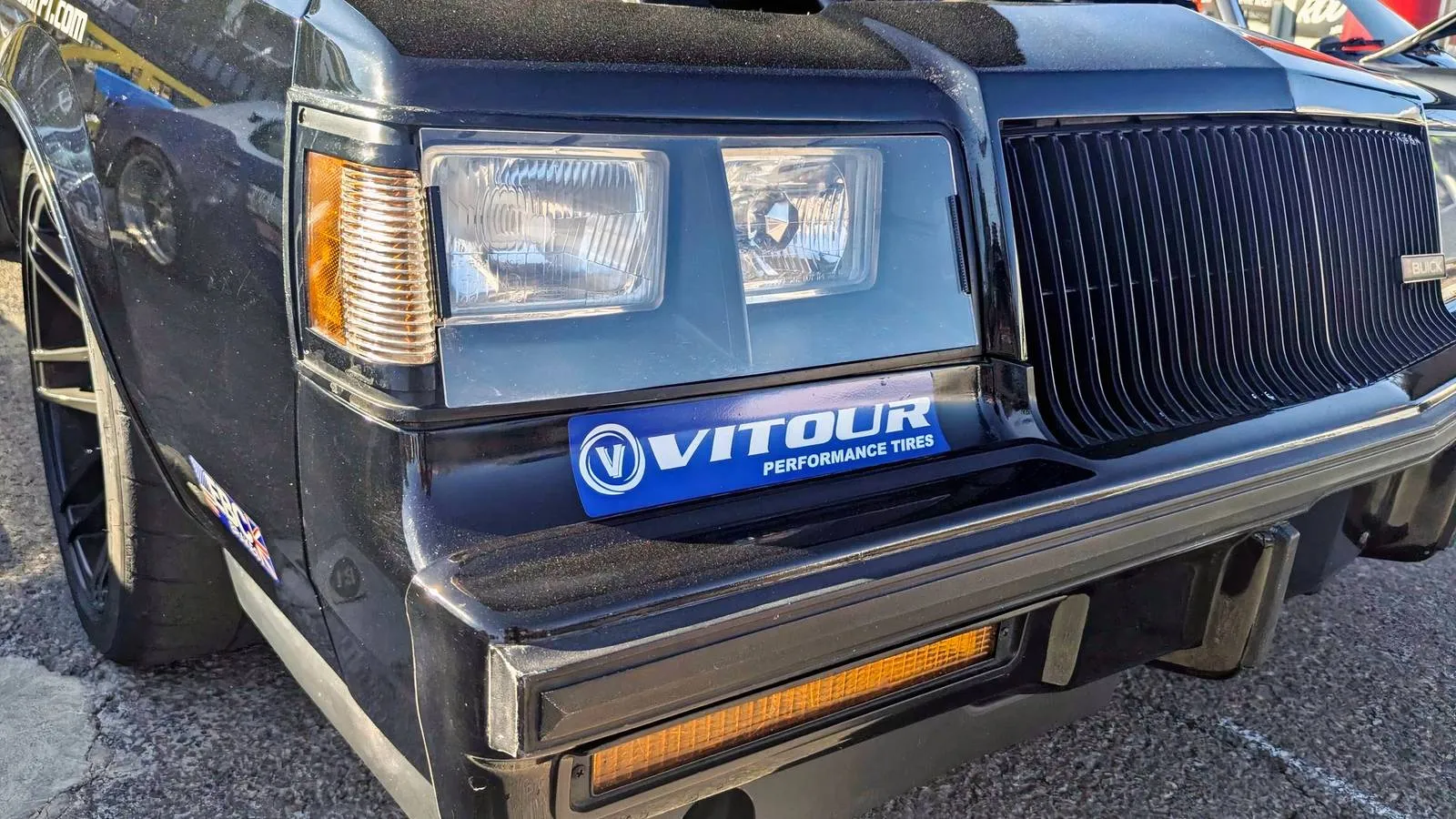
I can still vividly picture the sea of wild creations at the 2025 SEMA Show — carbon-fiber widebodies, slammed exotics, and pro-touring monsters screaming for attention. Yet, among all that chaos, one car stopped me dead in my tracks: a simple, black 1987 Buick Grand National. It didn't have a towering wing or million-dollar paint job. It didn't roar on startup like a dragster. Instead, it sat there, menacing and silent, looking almost exactly as it did when it left the factory nearly four decades ago. And that, right there, is why it stole the show.
Now, in 2026, the automotive world still buzzes about the builds from that event. But for me, this Grand National remains the benchmark of cool. How could a car so understated be so utterly captivating? The answer lies in its history, its engineering, and the masterfully subtle modifications done by its owner, Andrew Scott.
Let's rewind to the 1980s. The muscle car era was gasping for breath, strangled by emissions regulations. Chevrolet and Pontiac were trying to squeeze performance out of choked V8s, but Buick dared to do something different. They dropped a turbocharger onto a 3.8-liter V6 and stuffed it into the Regal's G-body platform. The Grand National was born. It was the black sheep, or rather, the black wolf in sheep's clothing. With its monochromatic paint, no chrome, and a sinister stance, it immediately said, "I'm not here to play." And when the GNX variant arrived for 1987, it became a legitimate Ferrari-slayer in a quarter-mile sprint. Displacement had been replaced, and the underdog won.
Seeing Scott's car at SEMA was like looking at a time capsule that had been slightly, perfectly tweaked. From the outside, aside from the blacked-out modern wheels wrapped in sticky rubber, it appeared bone-stock. But let's be honest — that's all it needed. The factory design is so iconic that any radical bodywork would have been a disservice. The black wheels only amplified the car's predatory aura. I remember thinking, "What would Darth Vader drive? This."
Popping the hood revealed a familiar sight: the turbocharged 3.8-liter V6, still based on the factory block. Was it heavily modified? Not in a way that betrayed its soul. Scott reportedly used sensible upgrades — likely a larger turbo, intercooler improvements, and supporting fuel mods — to wake the engine up without turning it into a temperamental race mill. This is a Buick that retained its original 4-speed automatic overdrive transmission and the 10-bolt rear end. That tells me the owner didn't hack the car apart; he worked with its inherent strengths. And that's a philosophy I deeply respect.
What makes this build even more remarkable is how Andrew Scott uses it: for autocross. Yes, a 1980s muscle car with a live rear axle competes in a discipline better suited to Miatas. I can already hear the skeptics: "A Grand National? In autocross? That's like bringing a sledgehammer to a chess match." Yet, Scott proved them wrong. He didn't throw on a full aftermarket tubular chassis or swap in an independent rear suspension. Instead, he studied the car's geometry and applied old-school hot-rodding tricks. For instance, he installed taller ball joints to correct the absolutely dreadful front roll-center these cars had from the factory. It's a detail most people overlook, but it transforms the way the car corners.
This approach is the antithesis of what we often see at SEMA, where bigger is better and nothing is left untouched. Don't get me wrong — I admire the craftsmanship behind those wild pro-touring builds. But there's an artistry in restraint. Scott's Grand National doesn't scream for recognition; it commands it through subtlety. The sponsorship decals on the body, which I'm told are required for his racing, could be peeled off in an afternoon, leaving a perfectly clean, factory-esque silhouette that any enthusiast would dream of owning.
Let's be real for a moment. In 2026, the collector car market is saturated with over-restored trailer queens and resto-modded monsters that cost more than a house. This Grand National is a breath of fresh air. It's a driver's car, forged at the intersection of heritage and intelligent improvement. Driving it hard isn't just possible; it's encouraged. The turbo spools, the automatic bangs off crisp shifts, and the chassis responds with a level of poise the GM engineers could only have wished for in the 80s.
I often find myself asking: What truly makes a build timeless? Is it the money poured in? The trophies won? Or is it the story it tells and the respect it pays to the original machine? Scott's Grand National answers that question eloquently. It hasn't lost its soul; it's just better. It's the car Buick would have built if they had today's technology and a deep understanding of suspension dynamics back then.
As I think back to that SEMA, the wild creations have started to blend together in my memory. But that low-slung black Buick remains crystal clear. It’s the kind of car that makes you want to grab the keys and head for a winding road, with no destination in mind. And honestly, isn't that what the hobby is all about?
In a world of automotive excess, the 1987 Buick Grand National of Andrew Scott stands as a quiet giant — and easily the coolest Buick to ever roll through a show floor.
For enthusiasts like Andrew Scott and others who cherish the art of blending nostalgia with modern ingenuity, inspiration often comes from unexpected places. Whether it’s a deep dive into automotive forums, a chance encounter at a car meet, or even exploring tools and resources online, the journey of discovery never truly ends. Staying connected to communities and platforms that fuel your passion is just as important as the build itself.
Speaking of resources, if you're someone who enjoys balancing hobbies like automotive restoration with gaming or other interests, tools like a steam sale tracker can be incredibly handy. They help you find the best deals on games, letting you unwind after a day spent in the garage. After all, even the most dedicated builders need a break to recharge and get inspired for their next project.

 English
 Arabic
 French
 Spanish
 Portuguese
 Deutsch
 Dutch
Dutch
 Italiano
 Russian
 Romaian
 Portuguese (Brazil)
 Greek
Greek