
Can an Auto Dimming Helmet Visor Replace Every Fixed-Shade Visor in Your Shop
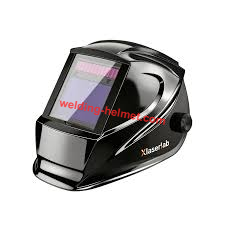
Every welding professional confronts a fundamental equipment choice: the fixed-shade visor with its permanent lens darkness, or the auto dimming helmet visor that adjusts instantly to changing arc conditions. This decision extends beyond personal preference into operational efficiency, safety compliance, and the ability to tackle diverse projects without constant equipment swaps. The fixed-shade visor, a traditional mainstay, offers simplicity and durability at a lower initial cost, yet its singular darkness setting restricts the user to a narrow amperage range. The welding-helmet equipped with auto-dimming technology, conversely, provides a dynamic viewing experience that shifts from clear transparency to programmable shade levels within fractions of a second. The practical question confronting every shop owner and independent welder remains: does your current visor configuration deliver the versatility required for the variety of tasks filling your workweek?
The fixed-shade visor operates on a straightforward principle: a permanently tinted lens, typically shade 10 or 11, that blocks a fixed percentage of light transmission. This design proves adequate for repetitive production welding where amperage and material thickness remain constant throughout the shift. The operator memorizes the specific shade requirement, and the visor performs its protective function without batteries, sensors, or electronic components that might fail. However, this simplicity reveals its weakness when the welder moves from 125-amp sheet metal to 350-amp structural steel. The same visor that protects adequately for the light-gauge application becomes dangerously insufficient for the heavier work, permitting excessive light penetration that strains the eyes and obscures the puddle. Alternatively, the dark fixed shade that suits high-amperage welding renders the thin-material task unnecessarily challenging, forcing the welder to strain toward the joint while losing sight of the surrounding workspace.
The Auto Dimming Helmet Visor resolves this limitation through a sophisticated liquid crystal filter that transitions from a light state (shade 3 or 4) to a dark state (shade 9 to 13) upon arc ignition. This transformation occurs through sensors detecting the ultraviolet radiation emitted by the arc, triggering an electronic response that aligns the liquid crystals to block transmitted light. The welder enjoys a clear view for setup, grinding, and inspection without lifting the visor, while the instant darkening provides protection the moment the arc strikes. This capability alone expands the visor's versatility across processes—TIG welding's bright, concentrated arc, MIG welding's intense glow, and plasma cutting's sustained brilliance all fall within the adjustable shade range of a quality auto-dimming unit. The operator simply rotates a dial to match the shade number to the specific amperage, transforming a single visor into a tool that adapts to the job rather than forcing the job to adapt to the visor.
Beyond the fundamental shade adjustment, the auto-dimming visor introduces additional versatility through sensitivity and delay controls that fine-tune its response to varying conditions. Sensitivity adjustment proves critical when working outdoors, where sunlight might falsely trigger the sensors, or when performing low-amperage TIG welding that produces a weak arc signal. The welder dials the sensitivity up or down to ensure reliable triggering without nuisance darkening. The delay control determines how long the visor remains dark after the arc extinguishes, preventing the flash that occurs when the operator lifts the helmet while the weld pool still radiates intense light. These adjustments, unavailable on any fixed-shade visor, enable the auto-dimming unit to perform optimally in dim workshops, bright outdoor environments, and confined spaces where lighting varies unpredictably. The fixed-shade visor offers no such adaptability, leaving the operator to contend with whatever environmental conditions exist.
The practical implications for versatility become evident when examining a typical workday that includes multiple processes. A fabricator might begin the morning with thin-gauge stainless steel TIG welding at 80 amperes, requiring shade 9 for optimal puddle visibility. The same project might demand plasma cutting of thicker sections at noon, with shade 11 providing the appropriate filtration. Afternoon tasks could involve MIG welding on carbon steel at 250 amperes, calling for shade 12 to manage the intense arc. The fixed-shade visor cannot accommodate this range—the operator would need three separate visors or endure compromised protection and visibility throughout the day. The auto-dimming visor, however, handles each process with a simple shade adjustment, maintaining consistent protection while allowing the welder to see the workpiece clearly during every phase. This single-device versatility reduces downtime, eliminates the cost of multiple visors, and simplifies the workstation arrangement.
The durability and reliability concerns that some welders raise against auto-dimming technology deserve examination against the fixed-shade alternative. The fixed-shade visor contains no electronic components, rendering it immune to battery depletion, sensor failure, or circuit board issues. Its longevity depends solely on the lens coating's resistance to scratches and pitting. The auto-dimming visor, by contrast, relies on precision electronics that demand regular battery replacement or solar charging, with sensor windows that require careful cleaning to maintain responsiveness. However, modern auto-dimming units from established manufacturers incorporate redundant sensor systems, low-power consumption circuitry, and robust housing designs that withstand workshop conditions. The versatility gained through adjustable shade settings, sensitivity controls, and light-state visibility far outweighs the minimal maintenance requirements, particularly for professionals who value efficiency across changing work requirements.
The economic calculation between the two visor types extends beyond the initial purchase price to consider the long-term operational costs and productivity gains. The fixed-shade visor appears less expensive upfront, yet its limited versatility forces the operator to maintain multiple visors or accept compromised performance on non-optimal tasks. The auto-dimming visor represents a higher initial investment but eliminates the need for additional equipment, reduces eye fatigue through optimized visibility, and decreases the likelihood of costly errors caused by poor weld placement. The operator who selects an auto-dimming welding-helmet invests in a single solution that serves production welding, maintenance repairs, and custom fabrication without restriction. This financial efficiency, combined with the physical convenience of a single visor that transitions seamlessly between tasks, positions the auto-dimming technology as the versatile choice for the modern welding professional.
For welders who demand consistent, reliable performance across diverse applications, exploring the range of Auto Dimming Helmet Visor options available at https://www.welding-helmet.com/product provides access to professional-grade equipment designed with these principles in mind. The auto-dimming models incorporate high-quality liquid crystal filters, multiple independent sensors, and intuitive controls that simplify the shade selection process. RLINGD, the manufacturer behind this product line, applies years of optical engineering expertise to create visors that balance protection, comfort, and adaptability. Selecting an auto-dimming welding-helmet with a wide shade range and responsive electronics eliminates the guesswork, allowing the operator to focus on the weld quality rather than the equipment limitations. After all, the ideal Auto Dimming Helmet Visor is the one that protects your eyes while enabling you to work efficiently and accurately, and welding-helmet stands ready to deliver that exact combination of safety and versatility for every project you undertake.

 English
 Arabic
 French
 Spanish
 Deutsch
 Turkish
 Dutch
Dutch
 Italiano
 Russian
 Romaian
 Portuguese (Brazil)
 Greek
Greek